



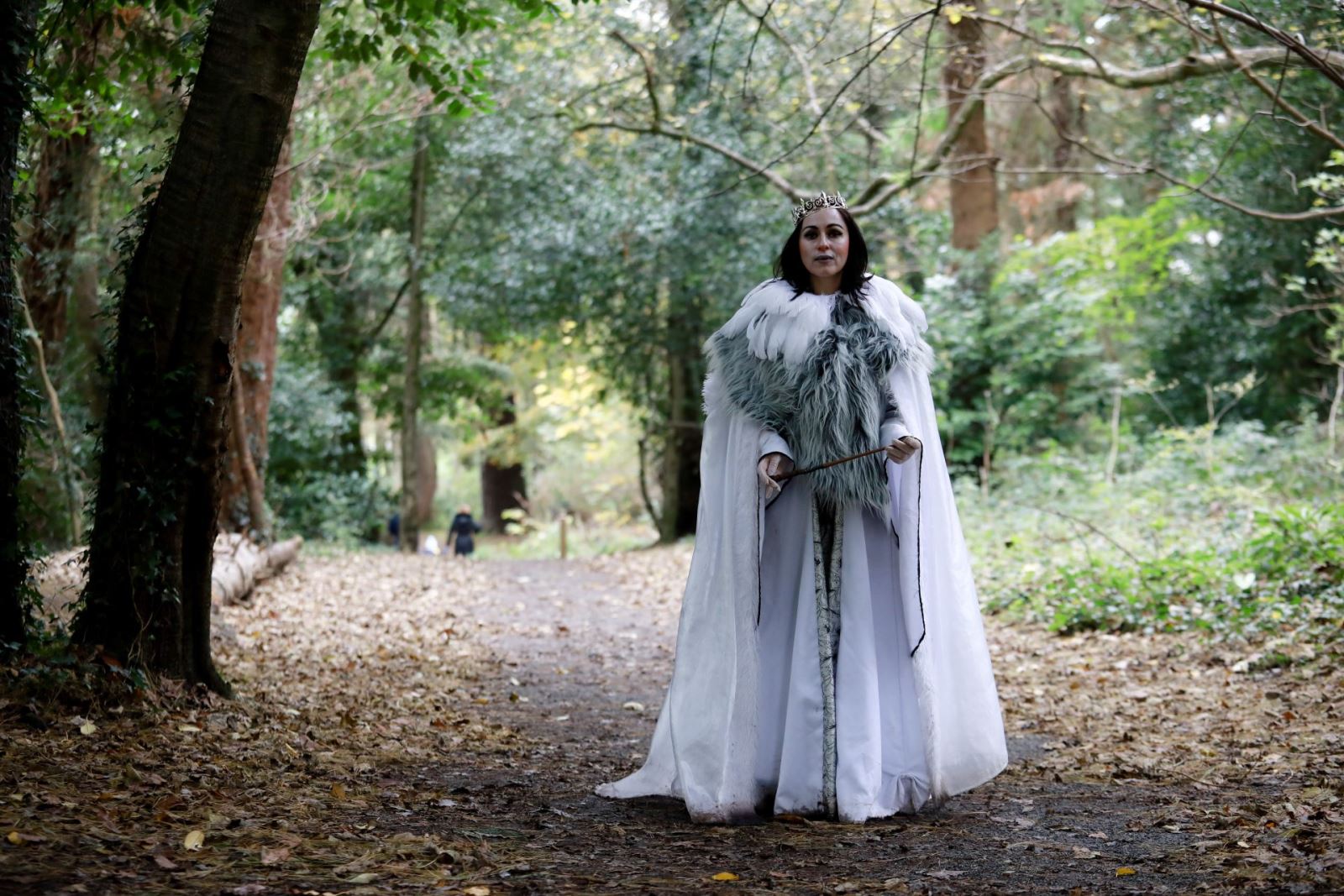
The White Witch has cast a powerful curse over Narnia, plunging the land into a neverending winter and never Christmas. Be warned, she possesses the terrifying ability to turn anyone who crosses her into stone. And whatever you do, don’t be tempted by her “enchanted” Turkish Delight!
The White Witch is an important character in "The Lion, the Witch and the Wardrobe" by C.S. Lewis. When the story begins, the White Witch has been reigning over the magical land of Narnia for a hundred years. For that entire time, she has enchanted the world to make it always winter and never Christmas. The frozen landscape bleak, cold and still reflects her character perfectly. The witch is pale and cold, practically lifeless, and lacking in both passion and compassion. In fact, the only passion she ever seems to feel is anger.
Why is the White Witch Evil?
The White Witch has many magical powers, including the power to create an endless winter and conjure enchanted food from a magic potion. As Narnia’s cruel tyrant she controls the land using her Secret Police, headed by the wolf Fenris Ulf, and a network of spies to control everyone in Narnia. Her punishments are brutal, and she frequently turns her enemies into stone statues which decorate her house and garden. She wants everyone to believe that she is Queen of Narnia, but really she has usurped that title from Aslan, a lion. The Witch's greatest fear is that Aslan will return and crown four human beings, two male and two female, as the rightful rulers at Cair Paravel. According to an ancient prophecy, then her powers will be destroyed. Although she is very powerful, her power begins to wane when Aslan does return to Narnia. Winter melts into spring and Aslan restores the Witch's stone victims back to their natural forms.
When Edmund, one of the main characters in “The Lion, the Witch and the Wardrobe”, first stumbles into Narnia, he meets The White Witch (Jadis) and is quickly captivated by her beauty and magical powers. She offers him enchanted Turkish Delight, which is an expensive candy that was only available in Britain as an import around the time when the book was written. She promises him more Turkish Delight if he brings her his siblings. Secretely, however, her plan is to kill Edmund and his siblings and prevent the prophecy that would spell her downfall from coming true.
Part of what makes the Witch so evil and so chilling is her deception. In the real world, we're used to appearances being deceptive. But in Narnia, appearances usually reflect true nature. Aslan looks good and noble and wise because he is. It's not hard to guess that creatures like centaurs and dryads are always good. And it's obvious that other creatures, like hags and wolves, are bad.
The Witch is the exception. She appears to be human, but she really is not. Mr Beaver explains that the Witch falsely claims human ancestry to justify her rule. Her ability to impersonate humanity, while lacking true human qualities, adds to her eerie, unsettling presence. Even her whiteness is unnatural, a symbol of her cold, lifeless power.
Although she's evil, the Witch also seems plays a role in Narnia's deeper moral structure. The Deep Magic from the Dawn of Time grants her certain rights. This implies that the Witch has been in Narnia since its creation and that she serves as a fixture of judgement within its ancient laws.
What we discover in “The Lion, the Witch, and the Wardrobe” is that, although the Witch is evil, she can't force others to obey her. She can threaten and punish, but she cannot control a person's inner choice. When the Witch feeds Edmund her enchanted Turkish Delight and convinces him to betray his brother and sisters to her, she merely exploits the sefishness already within him. So maybe the most frightening thing about the Witch is that she brings out the hidden flaws and weaknesses in others.
The White Queen of Narnia is an important symbolic character. As many people know, The Chronicles of Narnia is an extended Christian allegory, with each book examining different elements of the Christian faith. The White Witch represents a false god who is not as powerful as Aslan. Her interaction with Edmund makes her a strong symbol of temptation.
Where to find the Narnia Trail
Discover the legacy of the White Witch in Kilbroney Park. Will you dare to walk through the wardrobe and discover the Narnia Trail? Find out more here.

Kilbroney Park features riverside walks and an arboretum. There is a two-mile forest drive which showcases panoramic views over Carlingford Lough. There is also a Play Park with children's play area and tennis courts, an Information area and a café all on site.
This beautiful area has superb views and good walking routes over Carlingford Lough. Rostrevor Forest is also known as one of the highest ranking woodlands in the East of Northern Ireland and is set in an area of outstanding natural beauty.
The village has a number of beautiful walks through Rostrevor Forest and Kilbroney Park. Rostrevor is an area of historical interest and has lots of associated folklore. On the slopes of Slieve Martin in Kilbroney Park you will find the ‘Big Stone’. St Bronagh’s 6th Century Church and Bell and Giant Murphy’s Grave are also located in the village.
Famous for delicious, great value food & welcoming ambience, the award-winning Rostrevor Inn hosts a popular bistro, atmospheric traditional bar. The beautifully renovated 1800s building is yards from Kilbroney Park, the gateway to the Mournes.
The Sands is a family run bed and breakfast just 500 metres from the heart of the picturesque village of Rostrevor. The area is famed for its alpine scenery and the Sands boasts spectacular views of the Mourne Mountains.
Our philosophy is simple. Good food, the best staff and non-stop adventure in a comfortable safe environment. With a wide range of activities, meals and accommodation, we have the perfect combination for any adventure trip.
Leckan Mor cottage, with its large kitchen windows, offers beautiful views across the Mourne Mountains, and down the valley towards Carlingford Lough.
Fallows Trail is a 16.2km loop walk through spruce forests and over mountain slopes. It runs by the Yellow Water River, several streams and Red Bog Lake. There are many wonderful views along the route, such as those over Rostrevor and Carlingford Lough.
The Narnia Trail starts and finishes within Kilbroney Park, Rostrevor and brings to life the C.S Lewis book, "Chronicles of Narnia" with a number of features along the route.